Resilience and agility
Por Viver
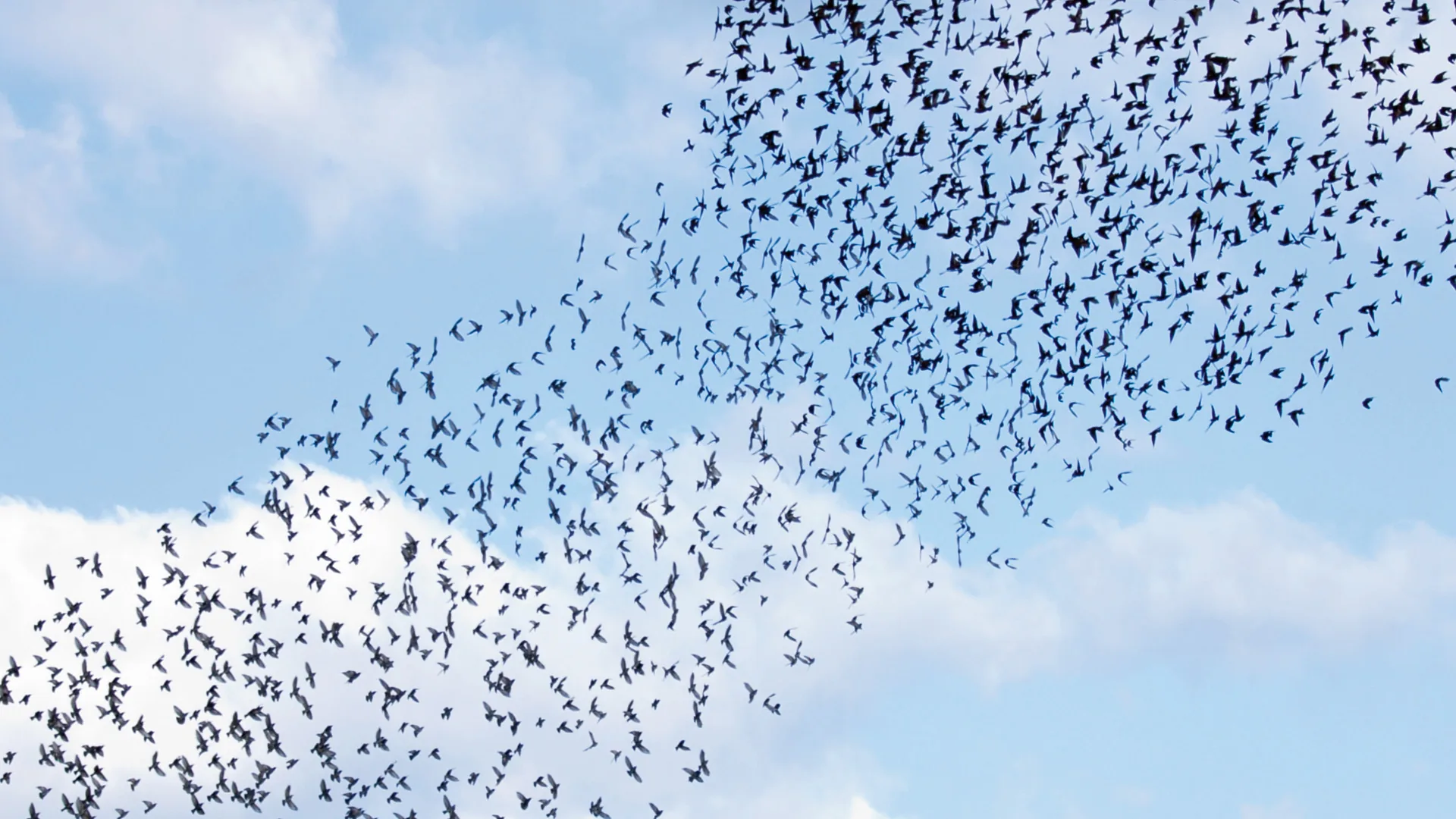
Change and biomimicry: dealing with uncertainty in an organic, natural way. Changing is the one certainty in a setting ruled by uncertainty, where developments follow hard on each other's heels. For 70 per cent of people, unfortunately, changing is no fun — and that often brings loss of motivation, resistance, high absence rates and the rest. Resilient organisations make change part of the daily run of things for everyone.
The 5 O change model helps identify the social behaviour of a group, and that behaviour determines which method of change fits. The method gives managers a handhold for empowering staff without running large risks. Communication is tuned to the group doing the work, and standard templates for communication are avoided.
What sits at the centre is the behaviour of staff within a group and the speed at which they act. The 5 O change model sets the frame managers need to understand and influence the roles different people play. Self-organisation is the key to success: that is how everyone stays motivated.
Behaviour
Changing means adapting. Every group or department has its own social system, and within that system people respond to particular stimuli. Biomimicry Consultancy uses the animal model to bring out which behaviour dominates, so the right means can be used to get the group moving. Through Theory U, and by making the experience of change enjoyable, resistance falls away.
The Fun Theory
Modern leadership
Continuous change calls for modern leadership. The leader is subordinate to the result, and facilitates and coaches the people doing the work. Egocentric behaviour gives way to ecocentric behaviour. That changes how reward systems, role profiles and thinking about organisational structure are put together. Above all, leaders step away from risk-averse behaviour, and performing to one's ability sets the tone.
BBC
Flexibility
Changing means flexibility, for processes and systems too. What customers want, what suppliers want and what production systems do will keep shifting faster. Responding to ever more available data, to new techniques and to better ways of communicating calls for a modular approach to change. People are the only ones capable of being agile and resilient. Putting people to work as an asset of the company is what determines the organisation's resilience.
Future Technology
Our approach
Depending on your brief, we go deeper with you and your staff to understand the drivers underneath the question. We call this the exploration phase. What it produces is an analysis of the problem and a plan of approach.
The next step is agreeing the overall design with senior management: what is the intended goal? Once that phase is complete, staff are involved in building the prototype and working the goal out in more detail. As a final step, staff set down a playbook covering who does what, when and how. Each phase has an end product that senior management assesses. That way you keep your grip, while your staff are directly involved from the start — which keeps motivation high and sees resistance fall away.
We work with proven techniques too, of course: brown paper sessions, lean analysis, process flows and so on. What we do differently is involve your staff from the outset, so that they determine how the road is travelled and at what pace. There is more about this approach in the book Firm of the Future 3.8: the resilient organisation.
Examples
We have devised and run a range of change programmes. Here are a few examples:
- At large national and international companies we brought social behaviour and the approach to change into line with each other. As a result, programmes were completed quickly and successfully without resistance worth the name.
- At an independent public body we defined the requirements of modern leadership together with management and drew up a plan of approach. By guiding that step playfully and inventively, using the values compass, the shift was made without insurmountable problems.
- At an energy company we helped think through setting the process up modularly and optimising the separate systems, with people's strengths used to the full.
Would you like to know more about us or our approach? Do get in touch.
Other services
Alongside consultancy we also offer masterclasses and programmes in the field of change:
 In-company masterclasses on change and social behaviour, and train-the-trainer formats. Together we put together a programme that fits. Do get in touch for more information.
Upcoming programmes
The current schedule comes straight from the Biomimicry Centre calendar.
Biomimicry Sustainable Community Manager
In de natuur ontstaat succes zelden alleen. Ecosystemen floreren dankzij samenwerking, communicatie en onderlinge afhankelijkheid.
- Start
- 20 January 2027
- Course days
- 6
- CPE credits
- 42
€ 5.450,00 excl. btw
Sign upDay programme 6
- Day 1 20 January 2027 Biomimicry en ecosystemen: de natuur als leidraad voor samenwerking.
- Day 2 3 February 2027 Stakeholdermanagement en gedeelde waardecreatie.
- Day 3 17 February 2027 Netwerk- en alliantiedynamieken: werken als een ecosysteem.
- Day 4 3 March 2027 Co-creatie en innovatie: biomimicry als katalysator voor samenwerking.
- Day 5 17 March 2027 Governance en besluitvorming: natuurlijke principes in samenwerking.
- Day 6 31 March 2027 Examen
Biomimicry Natuurgids
De natuur is de grootste innovator ter wereld. Gedurende 3,8 miljard jaar heeft zij oplossingen ontwikkeld voor uitdagingen op het gebied van samenwerking, materialen, energie, communicatie en aanpassingsvermogen.
- Start
- 22 January 2027
- Course days
- 7
- CPE credits
- 21
- Location
- Oosterbeek
€ 995,00 incl. btw
Sign upDay programme 7
- Day 1 22 January 2027 Inleiding Biomimicry, Biologie en Ecologie. Oosterbeek
- Day 2 5 February 2027 Natuurlijke intelligentie: fractals, structuren en patronen in de natuur. Oosterbeek
- Day 3 19 February 2027 Bomen, schimmels en materialen. Oosterbeek
- Day 4 12 March 2027 Vogels, planten en insecten. Oosterbeek
- Day 5 26 March 2027 Zoogdieren, amfibieën en bodemleven. Oosterbeek
- Day 6 9 April 2027 Natuur in en langs het water. Oosterbeek
- Day 7 Examen: het verzorgen van een biomimicry-wandeling met publiek. Individueel op afspraak, datum in overleg met de docent. Oosterbeek
Biomimicry Business Change Manager
Verandering is een natuurlijk proces. Ecosystemen ontwikkelen zich voortdurend door samenwerking, diversiteit, aanpassingsvermogen en veerkracht.
- Start
- 29 January 2027
- Course days
- 6
- CPE credits
- 42
€ 5.450,00 excl. btw
Sign upDay programme 6
- Day 1 29 January 2027 Biomimicry en verandermanagement: natuurlijke principes als basis voor transitie.
- Day 2 12 February 2027 Organisatiemodellen en toekomstbestendigheid: van statisch naar adaptief.
- Day 3 26 February 2027 Leiderschap en weerstand: veerkracht ontwikkelen in organisaties.
- Day 4 12 March 2027 Cultuurverandering en natuurlijke patronen: duurzame gedragsverandering faciliteren.
- Day 5 26 March 2027 Samenwerking en cocreatie: biomimicry als katalysator voor synergie.
- Day 6 9 April 2027 Examen
Biomimicry Product Development Manager
Voor de Biomimicry Product Development Manager is natuurlijk en ecologisch denken het vertrekpunt voor het ontwikkelen van duurzame en functionele ontwerpen.
- Start
- 23 April 2027
- Course days
- 6
- CPE credits
- 42
€ 5.450,00 excl. btw
Sign upDay programme 6
- Day 1 23 April 2027 Biomimicry Life’s Principles en de designspiraal.
- Day 2 7 May 2027 Biologically Inspired Design-model en 4-Box.
- Day 3 21 May 2027 Gulden snede en ontwerpdimensies.
- Day 4 4 June 2027 Vormgeving en lichtgewicht structuren.
- Day 5 18 June 2027 Cradle-to-cradle en Stad van de toekomst.
- Day 6 2 July 2027 Examen
Sustainability Business Development Manager
De economie van morgen vraagt om nieuwe businessmodellen, circulaire ketens en innovatieve producten en diensten die bijdragen aan zowel economische als maatschappelijke waarde.
- Start
- 17 September 2027
- Course days
- 6
- CPE credits
- 42
- Location
- Utrechtseweg 263 Oosterbeek
€ 5.700,00 excl. btw
Sign upDay programme 6
- Day 1 17 September 2027 Introductie NI-Businessmodel, biomimicry en circulaire economie. Utrechtseweg 263 Oosterbeek
- Day 2 1 October 2027 Sustainable businessmodellen, waardecreatie en impactanalyse. Utrechtseweg 263 Oosterbeek
- Day 3 15 October 2027 Natuurlijke designprincipes en biomimicry in product- en procesinnovatie. Utrechtseweg 263 Oosterbeek
- Day 4 29 October 2027 Life Cycle Analysis (LCA), footprintanalyse en duurzaam inkopen. Utrechtseweg 263 Oosterbeek
- Day 5 12 November 2027 Energiebeheer, circulaire ketens en regeneratieve bedrijfsvoering. Utrechtseweg 263 Oosterbeek
- Day 6 26 November 2027 Examen Utrechtseweg 263 Oosterbeek
LCA & Footprint Analyse
Duurzaamheidsvraagstukken vragen om inzicht, samenhang en onderbouwde keuzes. Net als in de natuur ontstaat effectieve sturing pas wanneer patronen zichtbaar worden en beslissingen zijn gebaseerd op betrouwbare informatie.
- Start
- 24 September 2027
- Course days
- 6
- CPE credits
- 42
- Location
- Utrechtseweg 263 Oosterbeek
€ 5.700,00 excl. btw
Sign upDay programme 6
- Day 1 24 September 2027 Introductie footprint- en LCA-denken: impact en methodieken. Utrechtseweg 263 Oosterbeek
- Day 2 8 October 2027 CO₂-footprint en GHG-protocol: scope 1, 2 en 3, dataverzameling en berekeningen. Utrechtseweg 263 Oosterbeek
- Day 3 22 October 2027 Life Cycle Assessment: doel en scope, systeemgrenzen en Life Cycle Inventory (LCI). Utrechtseweg 263 Oosterbeek
- Day 4 5 November 2027 LCA-berekeningen en interpretatie: impactcategorieën, MKI, scenario’s en onzekerheden. Utrechtseweg 263 Oosterbeek
- Day 5 19 November 2027 Van analyse naar sturing: reductiestrategieën, rapportage en besluitvorming. Utrechtseweg 263 Oosterbeek
- Day 6 3 December 2027 Examen Utrechtseweg 263 Oosterbeek
Source: Biomimicry Centre calendar.
Which animal fits your organisation?
Group behaviour in nature shows how organisations really move. Turn a card for the trait and the motto.